Farnborough 2024 vs 2026: How Two Years Changed Everything
02 Jun, 20266 minutes
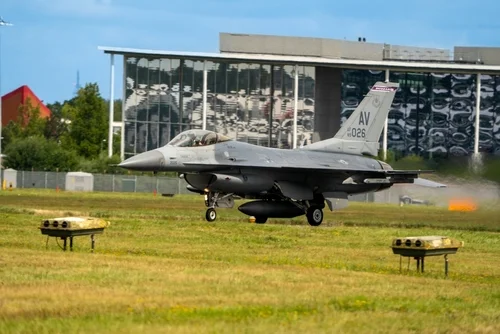
The world’s most important aerospace and defence show returns in July 2026. Two years ago the industry was talking about SAF pledges, eVTOL timelines, and the ‘future’ of autonomy. Here’s an honest look at what was promised, what actually happened, and why Farnborough 2026 will be a very different conversation.
There is something unique about the Farnborough International Airshow. It happens every two years, and because of that rhythm, it functions as a before-and-after photograph for the global aerospace and defence industry. The promises made in the chalets and conference halls of one show become the evidence reviewed at the next.
In 2024, Farnborough gathered against a backdrop of post-pandemic recovery, rising defence budgets, and a wave of optimism about the technologies that would define the next generation of flight. The six official themes: future flight, space, defence, sustainability, innovation, and workforce, reflected an industry that felt, cautiously, like it was getting its momentum back. More than 74,000 trade visitors attended, £81.5 billion in commercial aircraft orders were announced, and the mood was one of confident forward motion.
Two years on, the show returns to Hampshire on 20–24 July 2026. Some of the predictions from 2024 have proven correct. Some have not. And several conversations that barely featured two years ago will dominate the agenda this time around.
Here is the honest reckoning.
1. Sustainable aviation fuel: the gap between promise and progress
Sustainability dominated Farnborough 2024 in a way that had never been seen at a major airshow before. Airbus announced an investment in LanzaJet, a sustainable fuel technology company. Boeing and Clear Sky unveiled a partnership to develop a project turning sewage into jet fuel. A whole forum was dedicated to decarbonising aviation. The message from the industry was consistent: SAF is the answer, the investments are being made, and the trajectory is positive.
Farnborough 2024 - what the industry said
- SAF dominated sustainability conversations with major OEM partnerships and investment announcements
- The industry expressed confidence the net zero trajectory was on track
- SAF represented around 0.3% of total jet fuel consumption at the time
- Tone: ambitious and committed
Farnborough 2026 - what actually happened
- SAF accounts for just 0.8% of jet fuel in 2026 - growth has slowed despite production doubling in 2025
- SAF costs up to five times conventional jet fuel in mandated markets, adding an estimated $3.6bn to the global airline fuel bill in 2025
- IATA has downgraded earlier forecasts due to insufficient policy support and underutilised production capacity
- Tone: more cautious, more honest about the distance still to travel
The reality in 2026 is more complicated than the 2024 narrative suggested. SAF production doubled in 2025, reaching 1.9 million tonnes, but growth has decelerated into 2026. At current levels, SAF represents less than 1% of total jet fuel consumption globally, yet the industry needs it to contribute 38–58% of the decarbonisation solution by 2050. The gap between where we are and where we need to be is significant.
The cost problem remains the central challenge. The 2026 Farnborough conversation will be less about pledges and more about the structural economics of getting SAF to scale. That shift in tone is itself progress, the industry is being more honest about what it will actually take.
The net zero goal is still achievable but only if decarbonisation momentum accelerates significantly before 2030. The 2024 optimism was not wrong. It was early.
For engineering talent, the SAF supply chain, feedstock processing, chemical engineering, production scale-up is creating real, sustained jobs. Slower than the headlines implied, but real.
2. Advanced air mobility: from concepts to certification reality
If SAF was the sustainability story of Farnborough 2024, advanced air mobility was the future flight story. The show hosted its Global Urban and Advanced Air Summit, and a wave of eVTOL companies arrived with life-size mock-ups and commercial service ambitions set for 2025 and 2026. Joby and Archer were both projecting passenger services ‘as soon as next year.’ The sector felt like it was months, not years, away from the real thing.
Farnborough 2024 - what the industry said
- Joby and Archer projecting commercial passenger services by 2025–2026
- Multiple companies displaying full-size mock-ups; Wisk on its sixth-generation prototype
- Global Urban Air Summit held as a major show centrepiece
- Lilium still operational and positioned as European leader
- Tone: imminent commercialisation
Farnborough 2026 - what actually happened
- Joby reached Type Inspection Authorisation in November 2025 - the first eVTOL developer globally to reach Stage 4 of five-stage certification
- Commercial launch now projected mid-to-late 2027 at earliest, slipped by at least six months from earlier forecasts
- Lilium declared insolvency November 2024; European AAM significantly weakened
- US government backing is real: White House eIPP executive order June 2025, National AAM Strategy published, structured pathway for early operations ahead of full certification
- Tone: sober, determined, and more credibly on track than before
The sector has had its reckoning. Lilium, once positioned as the European leader, declared insolvency in November 2024 after failing to secure funding for regulatory approval. Commercial timelines stated confidently at Farnborough 2024 have slipped, and independent analysts tracking certification progress have pushed their forecasts back.
But the US story has genuinely moved. The FAA’s grant of Type Inspection Authorisation to Joby in November 2025 is a real milestone; the first eVTOL developer anywhere in the world to reach Stage 4 of the certification process. The US government has backed this with an executive order, a national strategy, and a structured early operations programme. The foundation is more solid than the 2024 timelines suggested, even if the schedule is longer.
Farnborough 2024 was the peak of eVTOL optimism. Farnborough 2026 is where the sector proves it can actually execute. The companies that make it through certification will define this industry for the next decade.
For engineering talent, the hiring profile has shifted decisively. The sector no longer needs R&D engineers comfortable with ambiguity. It needs engineers who can build, certify, and manufacture at scale — structural, propulsion, avionics, and systems engineers with production programme experience and regulatory knowledge.
3. Defence and autonomy: from discussion to budget line
Defence was present at Farnborough 2024, as it always is. The geopolitical environment was elevated and there were serious conversations about NATO spending commitments and supply chain resilience. Autonomy and AI featured on exhibitor stands and in sessions, but they were presented largely as emerging capabilities — technologies being researched and developed, not yet procured at scale.
Farnborough 2024 — what the industry said
- Defence present but not the dominant theme; autonomy positioned as an emerging capability
- AI in defence: experimental and pilot-stage
- Over 700 defence-focused companies at the show, supply chain resilience and NATO commitments discussed
- Tone: concerned about geopolitical environment, investment rising but not yet dramatically reshaping the show
Farnborough 2026 — what actually happened
- Defence is the defining theme of FIA2026: ‘Propelling Defence’ is a core show pillar with its own dedicated AGF Defence Summit
- The DoD made autonomy its own $13.4bn budget line for the first time in FY2026
- The FY2027 White House budget request: $54.6bn for the Defence Autonomous Warfare Group alone — a 243-fold increase from FY2026
- Shield AI raised $1.5bn at a $12.7bn valuation — up 140% in a year — and immediately acquired defence simulation company Aechelon
- Tone: AI in defence is operational, procurement-stage, and fully budgeted
The shift between 2024 and 2026 in defence and autonomy is the most dramatic of any theme at the show. What was discussed as a future capability at Farnborough 2024 now has its own line in the US federal budget. $13.4 billion in FY2026, and a $54.6 billion request in FY2027 for the newly created Defence Autonomous Warfare Group. That is a 243-fold increase in a single budget cycle.
The M&A market reflects this. Shield AI (which makes autonomous AI pilot software for military aircraft) raised $1.5 billion in March 2026 at a $12.7 billion valuation, immediately using part of the capital to acquire Aechelon Technology for its defence simulation capability. Private equity is moving fast into defence tech, recognising that the programmes are funded and the contracts are real.
At Farnborough 2024, autonomy was a theme. At Farnborough 2026, it has its own dedicated show pillar, its own government budget line, and its own M&A market. The pace of change between these two shows is unlike anything the previous decade of Farnborough comparisons has shown.
For engineering talent, this is consequential. Autonomy and AI software engineers, controls engineers, systems integration specialists, and cleared professionals across all defence disciplines are operating in the tightest candidate market in a generation. The roles being created by this budget cycle will define careers.
4. Workforce: from conversation to crisis
Workforce was one of Farnborough 2024’s six official show themes, and the conversation was serious. Record Pioneers of Tomorrow attendance — up 85% on 2022 — underlined both the interest in engineering careers and the urgency of the pipeline problem. The UK Prime Minister announced a dedicated Skills Body. The skills gap was discussed, honestly, as a medium-term challenge the industry needed to address.
Farnborough 2024 — what the industry said
- Workforce one of six official show themes; skills gap discussed as a growing medium-term challenge
- Pioneers of Tomorrow attendance up 85% on 2022; diversity and inclusion forums prominent
- UK PM announced a dedicated aerospace Skills Body
- Tone: concerned but manageable, long-term initiatives being put in place
Farnborough 2026 — what actually happened
- Workforce is now the binding constraint on industry growth, not a medium-term concern
- Three engineering job openings for every one qualified candidate across the US market
- $1.668 trillion in announced US manufacturing investment across 137 companies and 35 states — facilities being built faster than engineering teams can be assembled
- Cleared candidate shortage acute across the defence supply chain
- Tone: urgent, with some sectors describing the situation as a staffing emergency
In two years, the workforce conversation has moved from a medium-term concern to the defining operational constraint on industry growth. The reshoring phenomenon is particularly striking. Announced US manufacturing investment commitments have crossed $1.668 trillion across 137 companies and 35 states. But the capital is arriving faster than the talent pipeline can respond, greenfield facilities with whole production lines and no engineering team yet assigned.
The Skills Body and STEM initiatives from 2024 are necessary but they are long-term responses to a short-term problem. At Farnborough 2026, the workforce conversation will be sharper, more urgent, and focused on near-term solutions: immigration policy, reskilling pathways, the role of AI in extending engineer productivity, and how digital tools can compress training timelines.
What Farnborough 2026 will talk about that 2024 barely mentioned
The most important shift between the two shows is not within the existing themes, it is the emergence of entirely new conversations that were not on the agenda two years ago.
Golden Dome and space-based defence architecture
The US has moved from discussing missile defence concepts to funding a space-based intercept system. The Space Force received $26 billion in FY2026 appropriations, with an additional $13.8 billion for Golden Dome satellite systems under mandatory spending. This will feature prominently at Farnborough 2026 in a way it simply could not in 2024, when the programme did not yet exist.
AI-driven design, simulation, and manufacturing
Farnborough 2026 has named ‘Advanced Technology and AI’ as a dedicated show theme, covering AI-driven design and simulation, autonomous platforms, advanced avionics, and intelligent manufacturing. This theme did not have its own identity at FIA2024. US aerospace and defence spending on AI is forecast to reach $5.8 billion by 2029, 3.5 times 2025 levels.
Counter-UAS and the commercialisation of drone defence
The counter-unmanned aerial systems market, valued at $2.08 billion in 2025, is projected to reach $19 billion by 2035. The DoD awarded a $500 million C-UAS contract in May 2026. This is a sector that barely existed as a standalone commercial market at the time of Farnborough 2024 and will be one of the most active conversations on the show floor in 2026.
Transatlantic industrial strategy
The US-UK trade agreement, AUKUS, and the evolving defence industrial base conversation mean the transatlantic relationship is structurally different in 2026 than it was two years ago. Farnborough 2026 will reflect this with more explicit US-UK programme collaboration and industrial strategy on the agenda than any previous edition.
The pace of change is the story
What strikes you when you compare Farnborough 2024 and Farnborough 2026 is not that the industry was wrong two years ago. It is that the pace of change has been faster than even an optimistic reading of the 2024 landscape would have projected.
SAF is behind schedule but the infrastructure is being built. eVTOL is behind its most ambitious timelines but the US programme is on more solid ground than it has ever been. Defence autonomy has moved from research to procurement at a speed that would have seemed implausible in 2024. And the workforce challenge that was discussed theoretically at the last show has become the most acute operational constraint facing the industry.
For engineers working in or considering a move into advanced aerospace, defence, space, or advanced manufacturing, the two-year arc between these shows tells a clear story. The investment is real. The programmes are funded. The talent to deliver them is the one thing the industry cannot yet get enough of.
The conversation at Farnborough 2026 will not be about whether these technologies will happen. It will be about who has the people to make them happen at the pace the market requires.
Fruition Group’s US Advanced Engineering team will be at Farnborough 2026 across all four trade days, 20–23 July. If you’re attending and want to talk about what the show means for your hiring plans or your next career move, get in touch. We’d love to meet you there.
Sources:
- Farnborough International Airshow — FIA2024 Post-Show Report and FIA2026 Show Themes, farnboroughairshow.com
- Royal Aeronautical Society — Farnborough Air Show 2024 Preview and Day Zero Report, aerosociety.com
- AJG Plane Talking — Farnborough International Airshow 2024 Review, specialty.ajg.com
- CompositesWorld — Farnborough Airshow 2024: Aerospace Innovation and Collaboration, compositesworld.com
- IATA — SAF Production Growth Rate is Slowing, December 2025, iata.org
- ATAG — Waypoint 2050 Third Edition, January 2026, atag.org
- EASA — ReFuelEU Aviation Annual Technical Report, October 2025, easa.europa.eu
- Flying Magazine — 2025–2026 Electric Air Taxi Testing Overview, January 2026, flyingmag.com
- Flying Magazine — Joby Passenger Air Taxi Service 2026, December 2025, flyingmag.com
- DataDeep.tech — The eVTOL Reckoning of 2026, April 2026
- Smart Cities Dive — Air Taxis and Urban Air Mobility Latest Developments, March 2026, smartcitiesdive.com
- TechCrunch — Shield AI $1.5bn Series G, March 2026, techcrunch.com
- Govly — DoD Perennial Autonomy $500m C-UAS Contract, May 2026, govly.com
- Defense Daily / DefenseScoop — DoD FY2026 Budget $13.4bn Autonomy Line, June 2025
- Washington Technology — DoD $66bn IT Budget Pivots to AI and Efficiency, February 2026
- Spartan Corp — Beyond Replicator: DAWG Budget FY2027, April 2026, spartancorp.us
- PRNewswire — Defense Autonomy Spending Surges, February 2026
- IndustrialSage — US Manufacturing Investment Tracker, May 2026, industrialsage.com
Related Posts


Top Gaming Technology Challenges in 2025
29 May, 2025