The Merger Wave: Why Autonomous Aviation's Biggest Names Are Joining Forces
14 Aug, 20267 minutes
In the space of a few weeks, Archer acquired Wisk, SkyGrid and Insitu from Boeing. Joby acquired Resonant Sciences for $500 million. Anduril and Archer unveiled Thunder - a jointly developed autonomous VTOL platform - live from the Farnborough flight line. XTEND merged with JFB at a $1.5 billion valuation. Northrop Grumman and Embraer joined forces on next-generation tanking for the US Air Force. This is not a coincidence. It is a structural response to a market reality. Here is the honest argument on both sides.
The deals: what just happened
The autonomous aviation and dual-use aerospace sector has seen a wave of consolidation in the last six weeks that would have been unthinkable just two years ago - not because M&A is new to this sector, but because the scale, the speed, and the strategic intent behind these deals is categorically different from anything that came before. Each deal is different in structure, motivation, and consequence. But taken together they tell a single story about where this industry is and what it believes it needs to do next.
Archer + Wisk, SkyGrid and Insitu (Boeing) - $55M Boeing investment plus equity stake. Archer instantly gains 16 years of autonomous flight development, 1,700+ eVTOL test flights, air traffic management software, and a profitable defence business generating over $200M annual revenue across 35 countries. Boeing retains cross-licensing access to core autonomy technology while refocusing capital on its core businesses.
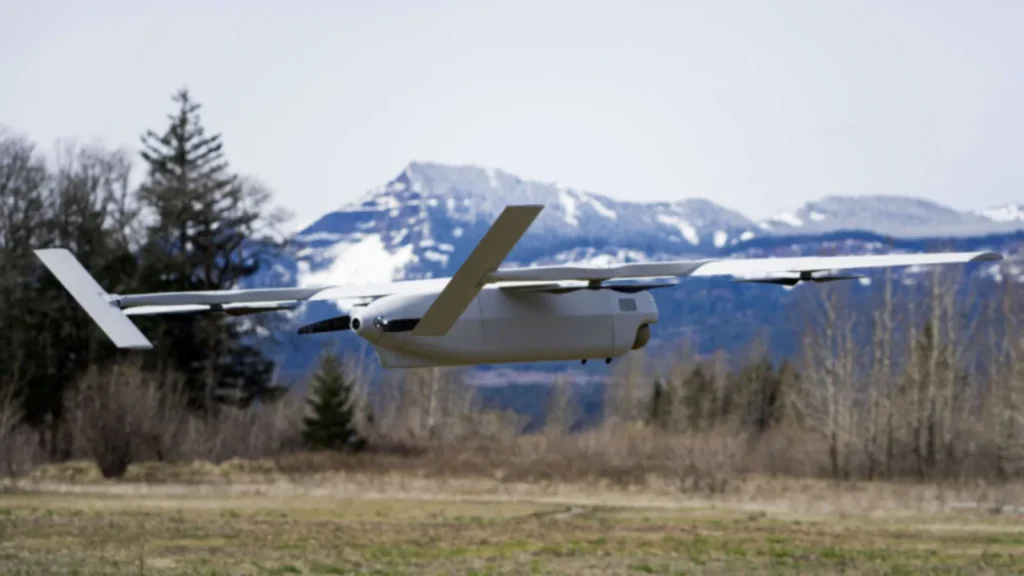
Anduril + Archer - Thunder - A clean-sheet, jointly developed series hybrid-electric autonomous VTOL platform. Anduril's defence variant, Thunder, is a Group 5 autonomous attack rotorcraft. Archer brings its commercial VTOL manufacturing and propulsion capability. First flight planned 2027. Announced live at Farnborough on 20 July.
Joby + Resonant Sciences - $500 million in cash and stock. Resonant Sciences brings military aircraft and autonomy technology into Joby's portfolio. A dedicated defence division launches immediately, led by Resonant's co-founder. The structure is deliberate: the defence unit operates separately so the core team can stay focused on FAA type certification and commercial air taxi launch.
XTEND + JFB - $1.5 billion all-stock merger creating XTEND AI Robotics as a publicly traded entity. XTEND - which advanced to Gauntlet II of the Drone Dominance Program - combines its AI-powered drone platform with JFB's capital structure and market access. The new entity is explicitly focused on defence and dual-use autonomous systems.
Northrop Grumman + Embraer - Joint development of the KC-390 Multi-Mission Tanker for the US Air Force, incorporating an advanced autonomous aerial refuelling boom, enhanced communications, and adaptable mission systems. Two established aerospace players pooling capability to meet next-generation USAF requirements neither could address as efficiently alone.
Five deals. Five different structures. One shared logic: the pace of innovation required by the market - government demand, certification timelines, dual-use opportunity - is faster than any single company can sustain alone.
The case for: why this makes sense
Specialisation is real and the combinations are genuinely additive
Archer builds aircraft fast. Its Midnight eVTOL went from concept to production-ready in a fraction of the time a prime contractor would have taken. But Archer did not have 16 years of autonomous flight data, a certified air traffic management platform, or an established defence supply chain in 35 countries. Wisk, SkyGrid and Insitu did. The combination is not just bigger - it is categorically more capable.
The same logic applies to Thunder. Anduril has unmatched capability in autonomous weapons systems, Lattice command and control, and defence procurement relationships. Archer has a proven electric propulsion system, tiltrotor design expertise, and the manufacturing agility to move from concept to flight test faster than any legacy platform. Neither company could have built Thunder in the same timeframe independently. Together they announced it at Farnborough with full-scale surrogate flight tests already complete.
The dual-use unlock is the real prize
The boundary between commercial autonomous aviation and defence autonomous systems is dissolving. Thunder is the most explicit example - a single platform with a commercial variant and a Group 5 attack rotorcraft variant, sharing a common propulsion system, airframe design, and manufacturing base. That dual-use architecture means the economics of each programme support the other. Development costs are shared. Manufacturing scale benefits both. And the customer base doubles.
This is not a new idea - it is what the most successful aerospace companies have always done. What is new is that it is now happening at startup speed, driven by companies that did not exist ten years ago, with government explicitly incentivising it through commercial-first acquisition reform.
Government is structurally encouraging it
US defence acquisition reform has shifted explicitly toward commercial-first procurement. The DoD is not just tolerating partnerships between commercial and defence companies - it is actively designing its acquisition frameworks to reward them. The Drone Dominance Program's gauntlet format, the eVTOL Integration Pilot Program, the Collaborative Combat Aircraft programme - all of them are structured to pull commercial innovation into defence applications faster than traditional procurement allows.
Joby's structure for the Resonant Sciences acquisition reflects this directly. A separate defence division keeps the commercial programme on its own certification timeline while accessing defence revenue and government relationships. It is a model designed for exactly the environment the DoD has created.
Capital efficiency at a moment when capital discipline matters
The autonomous aviation sector has consumed enormous amounts of private capital over the last decade. The companies that have survived and are now scaling are the ones that found ways to extend their runway - through government contracts, through partnerships that share development costs, and through acquisitions that add revenue-generating businesses rather than just capabilities.
Archer's acquisition of Wisk, SkyGrid and Insitu adds over $200M in annual defence revenue to a company that was previously pure eVTOL. That changes the financial profile of the business fundamentally - and it changes what investors see when they look at the balance sheet
The honest concerns: what could go wrong
Integration is hard and the best people often leave
Every acquisition announcement comes with reassurances about cultural fit and shared vision. The reality of integration is more complicated. When two engineering organisations combine, the engineers who defined the acquired company's capability face a period of uncertainty about their roles, their teams, and their career trajectory.
In a talent market where experienced autonomous aviation engineers have multiple competing offers, integration uncertainty is a serious retention risk. The companies that manage this well will be the ones that move quickly, communicate clearly, and give the acquired engineering teams real ownership of their programmes within the new structure.
Consolidation creates larger single points of failure
A company simultaneously navigating FAA type certification, production ramp for a commercial air taxi programme, integration of newly acquired subsidiaries, a joint development programme, and a newly established defence division is carrying a significant operational load. That concentration of concurrent priorities is a genuine programme management challenge regardless of how capable the organisation is.
The risk is not that any one of these programmes fails. The risk is that the management bandwidth required to run all of them simultaneously stretches the organisation at exactly the moment when execution on the commercial certification programme is most critical. A delay in Midnight's certification caused by organisational distraction is not a hypothetical - it is a genuine programme risk.
Regulatory complexity multiplies
Each of these deals adds regulatory surface area. A dual-use autonomous aviation company is simultaneously subject to DCMA oversight on Blue UAS compliance, antitrust review, ongoing FAA type certification, and DoD procurement compliance. The legal and compliance overhead of running a dual-use platform company is significantly higher than running a pure-play eVTOL startup.
For companies transitioning to publicly traded status through a merger, the addition of SEC reporting obligations, investor relations requirements, and governance complexity can stretch founding engineering teams who were not built to manage them. Getting this right requires bringing in operational and financial leadership capability that technical founders may not have.
Not enough independent capital to develop everything at pace
The merger wave is partly a response to a genuine constraint: there is not sufficient independent private capital in the sector to fund all of these programmes simultaneously at the pace the market demands. Partnerships and acquisitions are a way of pooling resources, sharing development costs, and accessing balance sheets that a standalone startup cannot match.
The concern is dependency. When commercial and defence programmes share the same capital structure, and strategic partners hold equity stakes, and joint development agreements create technology interdependencies, the independence of a company's strategic decision-making is more constrained than it was as a standalone startup. That may be the right trade-off. But it is a trade-off worth naming.
What this means for the people building these programmes
Every merger and partnership in this wave creates a specific and significant consequence for engineering talent. Some of those consequences are opportunities. Some are risks. All of them are worth understanding if you are an engineer working in or considering a move into autonomous aviation.
New roles at the intersection
The most important engineering roles created by this consolidation wave are not the ones that existed before. They are the ones that sit at the boundary between what each company was doing independently. Systems integration engineers who can work across Archer's eVTOL manufacturing capability and Anduril's autonomous weapons architecture. Programme leads who can manage a commercial certification programme and a defence procurement process simultaneously. Autonomy engineers who understand both FAA certification requirements and DoD operational concepts.
These profiles are genuinely rare. They require experience across commercial aerospace, defence systems, and autonomous flight that most engineers have only one component of. The companies that can identify and attract engineers with two of the three - and develop the third - will have a significant structural advantage.
The dual-use career
One of the underappreciated consequences of the dual-use platform trend is what it means for engineering careers. An engineer working on Thunder is simultaneously contributing to a commercial VTOL programme and a Group 5 defence autonomous system. The breadth of that experience - across propulsion, autonomy, certification, and mission systems - is genuinely rare and increasingly valuable.
For engineers from traditional aerospace or defence backgrounds who have been curious about the commercial autonomous aviation sector, this is the moment where the boundary has dissolved sufficiently that a move no longer requires choosing a side. The most interesting work is happening at the intersection.
The integration risk for candidates
If you are an engineer at one of the acquired companies - Wisk, SkyGrid, Insitu, or Resonant Sciences - the integration period carries real career risk alongside the opportunity. The most important question to ask is whether the acquiring company has given your programme a clear mandate and leadership structure within the new organisation. If the answer is yes, the combination likely offers more resources and more interesting problems than your standalone company did. If the answer is unclear, that uncertainty itself is information worth acting on.
The engineers who will define autonomous aviation over the next decade are the ones who can work across the commercial and defence boundary - who understand certification and mission systems, propulsion and autonomy software, manufacturing and operational deployment. The merger wave has made that profile more valuable than it has ever been.
The bottom line
The autonomous aviation sector is consolidating because it has to. The pace of innovation required - by government demand, by certification timelines, by the dual-use opportunity - exceeds what most standalone companies can sustain independently. The partnerships and acquisitions happening right now are a rational response to that constraint.
The risks are real. Integration is hard, the best engineers sometimes leave, and the regulatory complexity of running dual-use programmes simultaneously is significant. But the alternative - a fragmented sector of undercapitalised companies competing for the same small talent pool and the same government contracts - is not obviously better.
What is certain is that the engineering talent required to make all of this work is in shorter supply than at any point in the sector's history. The companies that win the next phase of autonomous aviation will be the ones that understand that the talent constraint is as real as the capital constraint - and act accordingly.
Sources
- Archer Aviation / BusinessWire - Archer to Acquire Boeing's Wisk Aero, SkyGrid and Insitu, August 2026
- Archer Aviation / BusinessWire - Anduril and Archer Unveil Thunder, July 2026
- Joby Aviation - Joby Agrees to Acquire Resonant Sciences for $500M, August 2026
- DRONELIFE - XTEND and JFB Announce $1.5B All-Stock Merger, July 2026
- Northrop Grumman - Northrop Grumman and Embraer Jointly Developing Advanced Air Mobility Capabilities, February 2026
- TechTimes - Archer Aviation Buys Boeing Drone Empire, August 2026
- Flight Plan / Forecast International - Archer Aviation to Acquire Boeing Subsidiaries, August 2026
- PwC - Aerospace and Defense US Deals 2026 Midyear Outlook
- Fruition Group - Reindustrialisation and the Future of Advanced Engineering in the US, 2026